Total Pageviews

Friday, September 2, 2011

NEWS: TYPES OF ALZHEIMERS DISEASE

courtesy WebMD

Types of Alzheimer's Disease

There are three known types of Alzheimer’s disease. They include:
  • Early-onset Alzheimer's. This is a rare form of Alzheimer's disease in which people are diagnosed with the disease before age 65. Less than 10% of all Alzheimer's disease patients have this type. Because they experience premature aging, people with Down syndrome are particularly at risk for a form of early onset Alzheimer's disease. Adults with Down syndrome are often in their mid- to late 40s or early 50s when symptoms first appear.

    Younger people who develop Alzheimer's disease have more of the brain abnormalities that are associated with it. Early-onset Alzheimer's appears to be linked with a genetic defect on chromosome 14, to which late-onset Alzheimer's is not linked. A condition called myoclonus -- a form of muscle twitching and spasm -- is also more commonly seen in early-onset Alzheimer's than in late-onset Alzheimer's.
  • Late-onset Alzheimer's. This is the most common form of Alzheimer's disease, accounting for about 90% of cases and usually occurring after age 65. Late-onset Alzheimer's disease strikes almost half of all people over the age of 85 and may or may not be hereditary. Late-onset dementia is also called sporadic Alzheimer's disease.
  • Familial Alzheimer's disease (FAD). This is a form of Alzheimer's disease that is known to be entirely inherited. In affected families, members of at least two generations have had Alzheimer's disease. FAD is extremely rare, accounting for less than 1% of all cases of Alzheimer's disease. It has a much earlier onset (often in the 40s) and can be clearly seen to run in families.

Monday, August 8, 2011

IN THE NEWS: DEALING WITH DIFFICULT PARENTS

I had a horrible altercation with my mother about an hour ago>  About a month ago her new physician prescribed medication for an underactive thyroid condition.  Additionally he had her take a vitamin supplement as well as an aspirin every day.  At the time she understood and had no problems following the istructions. This past Saturday I spoke to her and when I randomly asked how she was doing taking her medication she let me know she stopped taking it.  Apparently it made her somach feel bad (after a couple of weeks) and she stopped taking it.  The problem is she didn't tell her dctor what happened.  When I started to ask her a question she immediately shut me down (my mother throws tandrums at times depending on the situation and will tell me I am upsetting her) and said she would call the doctor Monday morning (today).  Knowing my mother will procrastinate I called the doctor myself this afternoon and left a message.  When I spoke to my mother a few hours later and told her what I did dhe became annoyed.  Told me something about the pharmacy calling and she was confused.  She told me not to call the doctor again. My response was to tell her that I was sorry she was upset but I won't apologize for what I did. Long story short she got nasty and hardly spoke to me for the remainder of the conversation.  A part of me wanted to lash out on the phone but it wouldn't have been worth it.  I know I am not dealing with the same person who gave birth to me.  This is an 83 year old and a shadow of who she once was.  Years of work and worry and whatever have caught up to her and she is a fragment of the person I knew.  I don't think she is her right n=mind any more and it wouldn't surprise me if she is planning to die.  She has lived a pretty decent life and who knows what pains she may be experiencing.  As her son though I will not apologize for doing the right thing.  She wasn't taking medication because it made her feel ill so I told the doctor.  I would gladly do it again.
A little later I found a few articles on the internet about dealing with difficult elderly parents:


How to Deal With Difficult Elderly Parents

 
How to Deal With Difficult Elderly Parents
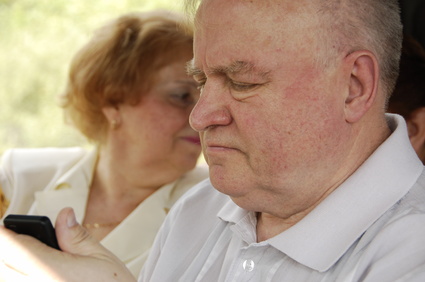
mature couple grand mother and grand father image by Daria Miroshnikova from Fotolia.com
How to Deal With Difficult Elderly Parents

Overview

Caring for an elderly parent with Alzheimer's disease or one with a disagreeable disposition can be trying and overwhelming. According to the National Institute on Aging, everyday challenges that include the basics, such as eating, dressing and bathing, can be difficult. Whether you are taking care of a difficult parent at home or just visiting in a nursing home, you can effectively deal with the behaviors you will encounter.

Step 1

Talk to your parents before they develop dementia or become dependent on your assistance. Communicating their desires and expectations before needing your help prepares you for the demands you may receive eventually. When a crisis arises, you'll be able to comply with their wishes.

Step 2

Review your declining parents' financial status to make sure the money is available for the necessary care they'll need. You also can prepare for the added expenses if your elderly parents are financially insecure. Make sure you know where their insurance papers are and what legal arrangements may or may not have been made.

Step 3

Include your parents in family gatherings and duties, especially if they have to live with you. Often parents become cranky when they feel left out or excluded. According to the OCM Board of Cooperative Educational Services, aging parents should contribute to their own care and help you when they are able. They will retain more of their self-respect when asked to participate and perform whatever chores and duties they can.

Step 4

Perform a safety check of your parent's home so they can maintain more independence and less reliance on you. According to the Federal Trade Commission, great strides have been made in accessibility modifications that can help seniors. Consider such things as handrails, moving living quarters to one floor and making sure the house is free of clutter.

Step 5

Invite friends and other family members to visit with you and your parents on a regular basis to avoid burnout. According to the American Psychological Association, tension and stress usually are eased when elder parents are socially interactive.

Tips and Warnings

  • If you suspect that the elderly person is being difficult because she is depressed, encourage her to seek help through a psychologist or family doctor. According to the University of California, older people often are reluctant to talk about their feelings and don't receive proper treatment. Late-life depression, however, can be effectively treated with medication and talk therapy.
  • While your parents may require an enormous amount of personal care, you must make sure to take care of your own mental and physical health. According to the National Institute on Aging, caregivers are at risk for developing a number of conditions, ranging from depression to physical ailments. Take time off and ask for help and support from friends and family members when you need it. Don't forget about your own family when caring for your parents. According to the Employee Assistance Program at the OCM Board of Cooperative Educational Services, you have a duty to your own children and their needs as well.

References

Linda Ray
Linda Ray
Photo Credit: mature couple grand mother and grand father image by Daria Miroshnikova from Fotolia.com
Article reviewed by Allen Cone | Last updated on: 03/31/11


Read more: http://www.livestrong.com/article/212147-how-to-deal-with-difficult-elderly-parents/#ixzz1UUQKrHcW

IN THE NEWS

August 4, 2011, 12:20 pm

When They Won’t Spend the Money

My friend Cynthia, who works as an independent home care aide in Northern California, told me about her latest client, a 93-year-old widow who broke a hip in a fall and underwent replacement surgery. After two months in a hospital and in rehab, she returned home with instructions to hire home care four hours a day, seven days a week — a reasonable-sounding compromise between safety and independence.
Her family lucked out in hiring Cynthia, a caring and competent helper who now makes the woman’s breakfast, helps her shower, empties the bedside commode, walks the spaniel, does the laundry, leaves her a bowl of homemade vegetable soup for lunch. For this Cynthia charges $18 an hour, much less than agencies would charge in the pricey Bay Area.
But the woman will hire Cynthia only 10 hours a week, instead of the recommended 28, and is balking at even that. Cynthia doesn’t have time to really clean the house, cook meals or read to her elderly charge, who has glaucoma. “She claims she can’t afford to pay me,” Cynthia lamented.
She also doubts that’s true. Her client sold a big house on several acres at the height of the real estate market and pocketed perhaps $300,000 on the transaction. But while she buys high-quality dog food, Cynthia said, “she’s resistant to spending money on herself.”

We know that many older Americans — about 17 percent — live in poverty and that Social Security provides the primary support for nearly half the elderly population. And we know that for virtually any kind of paid assistance, the price is shocking.
But we also know this: Some seniors can afford to pay for what they need, but won’t.
Take the prosperous couple that moved from out of state to an independent living community in Boston with the help of a local geriatric care manager, Suzanne Modigliani. The husband remained hale at age 90 and had plans to visit bookstores and religious services; his wife, 82, had early dementia and a variety of other medical problems and couldn’t dress or bathe without assistance.
The man worried constantly that the law firm he’d retired from would have a bad year, resulting in lowered income for partners. When Ms. Modigliani suggested hiring a driver to help ferry him around and a home care worker to care for his wife, he debated every expense, hired piecemeal or not at all, and expected his devoted daughter — who had a full-time job and teenage children — to handle routine matters.
“If you looked at how much they had and how much this help would cost, there was no possible way they could have run through their savings,” Ms. Modigliani recalled. “At one point his daughter, who rarely got angry, actually swore at him, because her mother wasn’t being adequately cared for.” But not until the wife grew very ill and the need for help became undeniable did the husband consent to a live-in aide.
What’s this about? I’ve searched for some credible research on how attitudes towards money vary by age cohort, and I’ve come up empty. So it’s hard to know the extent of this unwillingness or inability to spend money on one’s own comfort and care.
It’s not universal. A January survey by the nonprofit Employee Benefit Research Institution found that two-thirds of retirees over age 70 are confident that they have enough money to live comfortably, though that percentage drops to less than half where annual household income is below $35,000 and when a respondent reports fair or poor health. Still, these retirees are more confident about their finances than those still in the workforce.
While a social scientist would call these stories anecdotal evidence, a lot of gerontologists, social workers and family members find them familiar.
One explanation is historic. People over age 80 knew firsthand the hardships of the Great Depression. “Anyone who lived through that era realized the contingencies of life and the vulnerabilities,” said Andrew Achenbaum, a historian of old age at the University of Houston. Even for people who’d climbed into the middle class, “there was always this lurking fear that everything could turn around in a second,” he added. “It made them edgier than they would have been otherwise, and it has persisted throughout their lives.”
This cohort effect may fade, therefore, as the baby boomers grow old. We’re used to spending money, for better or worse, and to hiring helpers for everything from child care to dog-walking.
But wrangles about money are rarely only about money. The desire to leave a legacy, such a potent force at older ages, can hold sway even when the potential heirs don’t need such largess.
“What motivated these parents to save all these years? To provide for their families,” said Barbara Moscowitz, senior geriatric social worker at Massachusetts General Hospital. “I don’t think they grow out of thinking that way, even when their children are 57 or 60.”
Perhaps they’ve promised to pay a grandchild’s tuition or to underwrite a wedding. Meanwhile, their children may be begging them to spend their savings on things like grab bars and ramps, aides and physical therapists, new air-conditioners or assisted living apartments.
Sometimes, Ms. Moscowitz said, resistance couched in financial terms has little to do with money at all. Maybe a parent can’t accept his need for help, dreads dependency and loss of control, fears mortality itself. “I can’t afford it” provides a good all-purpose excuse.
Or maybe, Ms. Moscowitz points out, what connects busy children to their parents are tasks and obligations, leaving the elders to wonder: “If I hire someone to do what my daughter does for me, will I see my daughter?”
Having money and not spending it may be a problem lots of caregivers wish their families had, but it’s a problem nonetheless. “Money is a very emotionally charged issue,” Ms. Modigliani said. “It’s hard for rationality to rule.”


Paula Span is the author of “When the Time Comes: Families With Aging Parents Share Their Struggles and Solutions.”

Sunday, July 31, 2011

ON A PERSONAL NOTE: RIP Part 4 (so far)

Let's see if I can make some sense with this entry.

For years my nickname has been Batman or Bats.  This is a nickname I have had since the late 1980s and I got it because it matched my personality.  I can be dark, moody, cynical and not very trusting.  I can appear to be mean but I also do have  a code of ethics so a lot of people who know me trust me because there is a consistancy with me. The look is a little deceiving.  I am not really mean.   I don't tolerate a lot of shit but I am not eally mean.  Grumpy but not mean.

Like the character I am a loner.  I do virtually everything by myself.  It is difficult for me to completely trust people.  Blood relatives generally get a pass as I don't sweat them and luckily I have a very good family and have not been screwed over by my paternal or maternal relatives.  Everybody else gets an eyebrow.  Not a complete distrust but not a complete trust either. Everyone has an agenda

ARCHIVES: Originally posted 10/27/2009...last of the old (from 2009)

from 10/27

October 27, 2009
Still realizing that that eventually you have to let go.

Tuesday, July 5, 2011

NEWS: HIV and senior citizens....a scary story

HIV Targets Senior Citizens

Entering her second year as a widow, my dear friend Rachael was past the several stages of grief and closing that chapter of her life; not an easy task but necessary for anyone who has survival instincts. She began dating again and I couldn’t have been happier for her. Sam was like a brother in a sense; a long time friend from our college days. At first it was dinner and theater tickets but soon developed into weekends at his Lake house.
Post menopausal, it didn’t occur to Rachael to consider condoms. And in retrospect, she would not have asked Sam about his sexual activities – there were things our generation didn’t talk about. Therefore when her physician put her through a battery of tests because of her complaints regarding sudden weight loss and fatigue, she was shocked when she tested positive for HIV.
How does this happen at age 64, she wanted to know. But it’s a fact: anyone can get HIV/AIDS regardless of age from having unprotected sex, or sharing needles with an infected person. Latex condoms can help prevent, but not insure an infected person from transferring the virus to another. Because she did not know her partner’s drug and/or sexual history, she was at risk!
Best friends since high school Rachael confided in me. We decided to do an in-depth study of patients 55 years and older with HIV/AIDS. But we were immediately at a disadvantage because many, or should we say most, older people often mistake signs of this virus for the normal aging complaints -- exactly as Rachael had and they are less likely to get tested. Besides, what patient in their senior years wants to discuss their sexual activity with a physician that’s probably half their age? Not!
We soon realized the myths and misconceptions regarding all elderly citizens help put the barriers in the way of diagnosis and treatment of HIV/AIDS. It is still assumed that old people live a life of celibacy and sobriety. Unfortunately, senior adults do not always conform to public images any more than teens do. Adding to this the doctor’s “Don’t ask, don’t tell” posture and we’re at an impasse.
Statistics do confirm that older women are becoming infected at a higher rate than older men. Without the fear of pregnancy, the post-menopausal woman who is uninformed of the dangers may become more sexually active with more partners. Even her biology increases her risk as the vaginal walls thin and lubrication decreases; thus, the membranes are more likely to tear during intercourse, providing access for the virus.
But whatever the reasons… failure to communicate leads to failure of diagnosis in its early, most treatable stages. In many ways, HIV and old age converge and aggravate each other rather than conflict. For instance, memory loss may indicate AIDS-related dementia or Alzheimer’s disease. This distinction is important because dementia can be reversed; Alzheimer’s cannot.
As if the social isolation among senior citizens who have lost a spouse is not enough, it is multiplied many times over if their families realize they have HIV/AIDS. Shamefully, this virus entered a society already having little respect for its seniors. Most adult children lack the patience, and precious few want the burden of caring for their parents in their final years.
While it is common knowledge that the face of AIDS is changing with the greater proportion being people of color, women, children and heterosexuals -- what we never hear is that the face is also aging.


------------------------------------------
Smith can be reached at: editor@thepermanentventure.com
------------------------------------------

Wednesday, June 29, 2011

Alzheimer's Disease Symptoms and Signs (Early, middle and late stages)

(FOUND at emedicinehealth.com)

Medical Author: Norberto Alvarez, MD
Medical Editor: Melissa Conrad Stöppler, MD

Recognizing Alzheimer's Disease Overview


Alzheimer's disease (Alzheimer disease) is one of many causes of dementia, an impairment in memory and thinking that is severe enough to affect an individual's ability to function in daily life. Symptoms of Alzheimer's disease are subtle at first and may be identical to those associated with other causes of dementia. While this article is a guide to the symptoms associated with various stages of Alzheimer's disease, the diagnosis of the condition must be made by a doctor who can determine the exact cause of the symptoms and rule out other causes of dementia.
Alzheimer's disease begins with a mild, slowly worsening memory loss. These initial symptoms typically develop over a period of years and may be subtle. The disease progresses at different rates in different people. Over time, people with the disease lose their ability to think and reason clearly, make judgments, solve problems, communicate, concentrate, remember useful information, and take care of themselves.
As the disease progresses, changes in personality and behavior can develop. Individuals may experience anxiety, agitation, paranoia, delusions, and hallucinations.

Warning Signs of Alzheimer's Disease


The following signs are considered 'warning signs' that should prompt an evaluation by a healthcare professional.
  • Memory loss
  • Language problems
  • Difficulty in performing familiar tasks
  • Poor judgment
  • Misplacing items
  • Disorientation
  • Rapid mood swings
  • Personality changes
  • Increased apathy or passiveness

Stages of Alzheimer's Disease: Symptoms


Symptoms typical of the early, intermediate, and late stages of Alzheimer's disease are presented below. It is important to remember that each case is unique, and a given individual may experience some but not all of the symptoms at a given time.

Symptoms of Early Stage of Alzheimer's Disease


  • Difficulty in recognizing familiar people or things.
  • Difficulty recalling names of new acquaintances.
  • Trouble remembering recent events or activities.
  • Inability to solve simple arithmetic problems.
  • Forgetting where they have recently placed objects.
  • Finding the right word for a familiar thing and performing familiar tasks can be difficult.
  • Individuals may seem withdrawn in social situations.
  • Trouble performing complex tasks such as planning an event or paying bills.
  • Individuals can still understand and participate in conversation.
  • They can find their way through familiar surroundings without help.
  • They can still read and write and retain information long enough to rationalize.

Symptoms of Middle (Intermediate) Stage of Alzheimer's Disease


  • Starting to have trouble carrying out everyday activities such as bathing, dressing, and grooming without help
  • Major gaps in memory begin to be evident, with individuals often unable to recall their address, the year, the season, and recent events.
  • Individuals often incorrectly remember their personal history.
  • Inability to think clearly and solve problems
  • Inability to make judgments such as dressing for the weather
  • Difficulty with understanding or learning new information
  • Speaking, reading, and writing are difficult, but individuals can usually read and understand short phrases, especially common ones.
  • Individuals can be disoriented or confused even in familiar surroundings, occasionally forgetting names of people close to them.
  • Beginning to experience significant behavioral symptoms such as anxiety, suspiciousness, hallucinations, or delusions
  • They can still remember things that happened long ago and recognize people from early in their life.
  • They still recognize their own face.
  • They can interpret simple sensory experiences (sound, taste, smells, sights, and touch).
  • Walking and mobility are usually not difficult.
  • They can usually still eat and use the toilet without assistance.
  • Individuals can make decisions requiring a simple yes/no and either/or judgment

Symptoms of Late Stage of Alzheimer's Disease


  • Complete loss of short- and long-term memory, potentially even the inability to recognize even close relatives and friends.
  • Complete dependence on others for everyday activities including eating and using the toilet.
  • Urinary or stool incontinence.
  • Severe disorientation- including wandering and getting lost.
  • Heightened behavior or personality changes such as hostility or aggressiveness, may be apparent.
  • Individuals lose their mobility and may be unable to walk or move or even sit without help.
  • Impaired ability to communicate.
  • Other movements, such as swallowing are impaired, which increases the risk of malnutrition, choking, and aspiration.
  • Interpreting and using basic body language is still possible.
  • Individuals can usually still understand and experience sensory information.

For More Information


Alzheimer's Association
919 North Michigan Avenue, Suite 1100
Chicago, IL 60611-1676
(800) 272-3900
Fisher Center for Alzheimer's Research Foundation
One Intrepid Square
West 46th Street & 12th Avenue
New York, NY 10036
at 1-800-ALZINFO